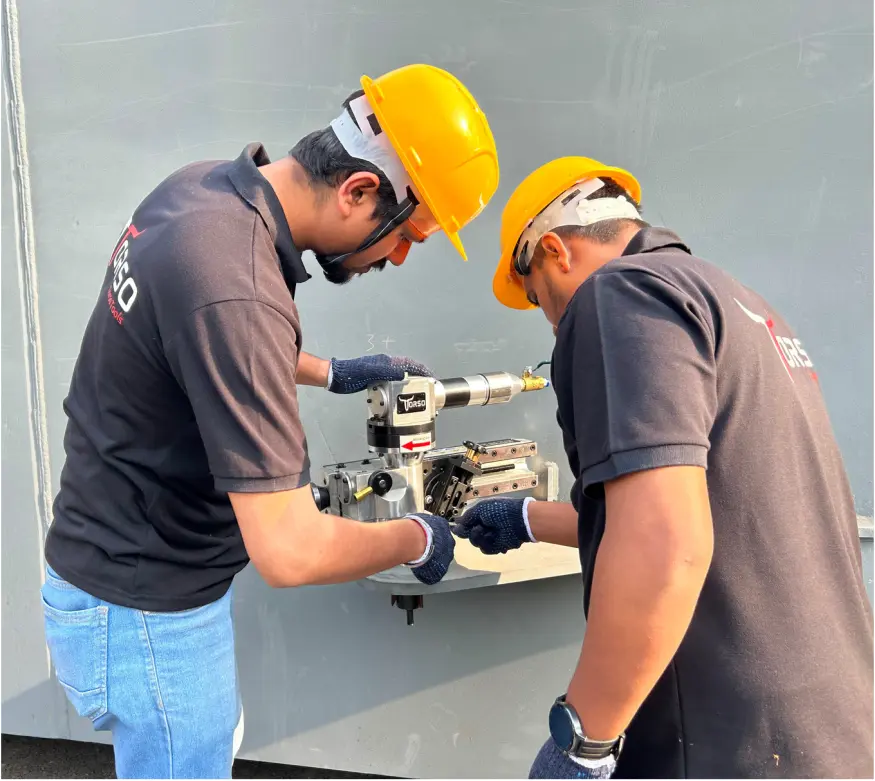
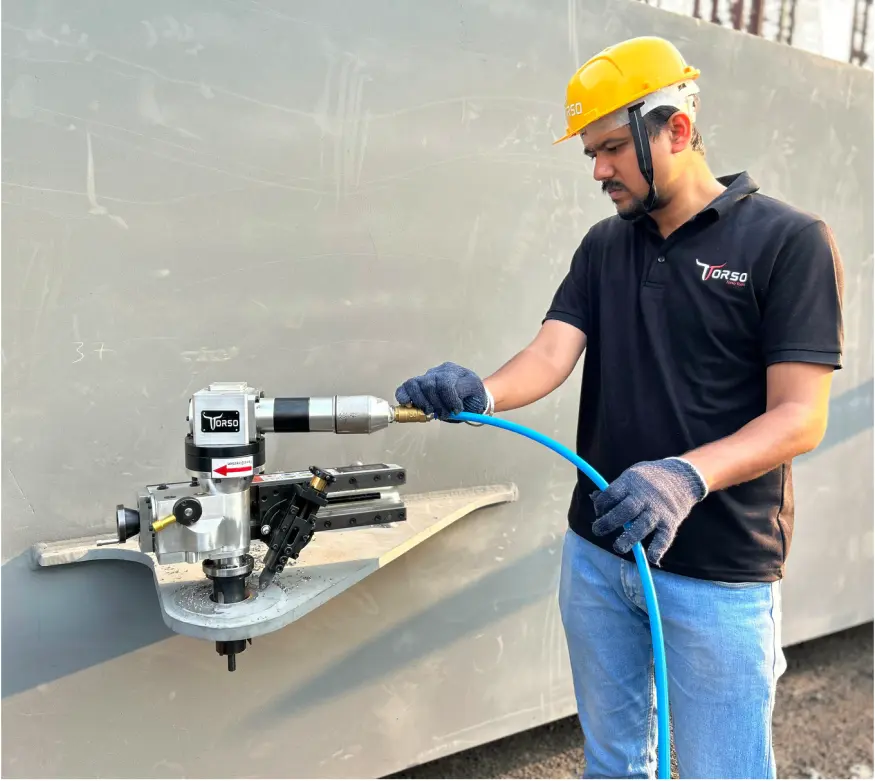
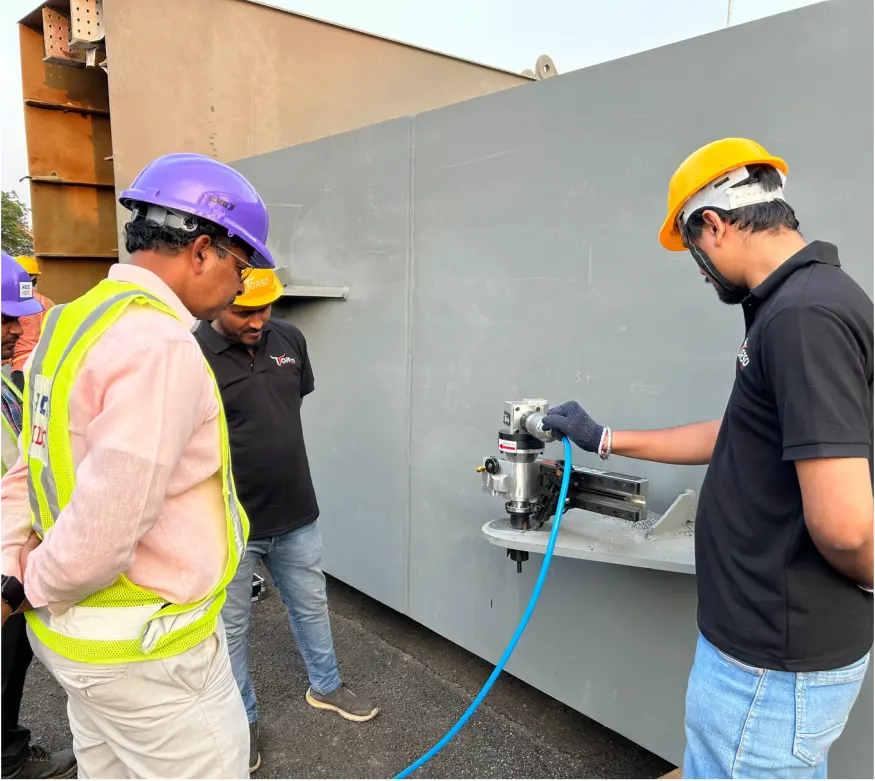
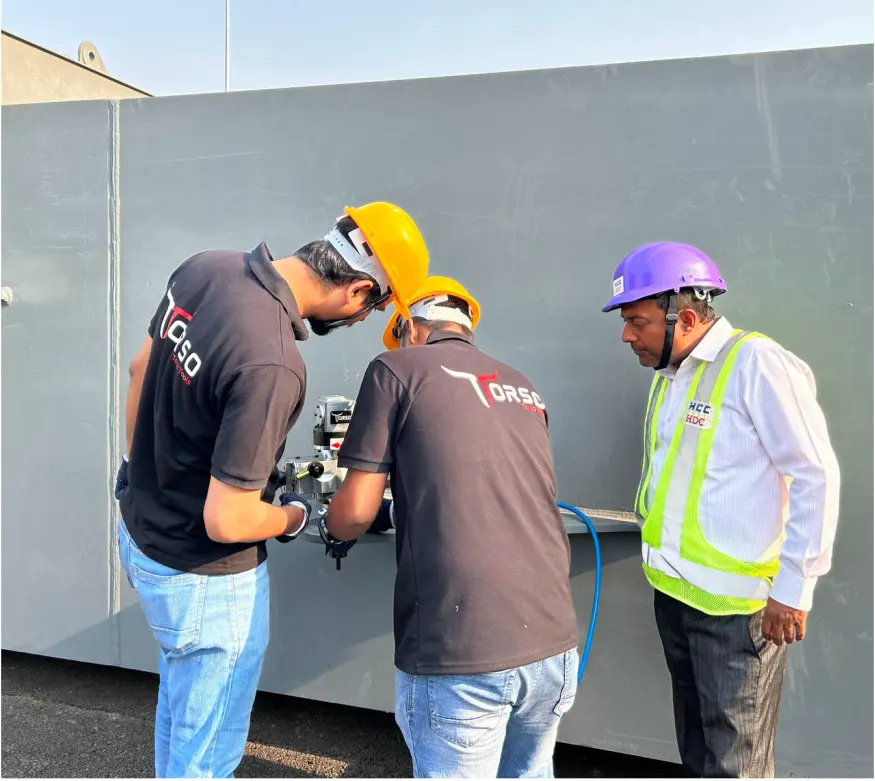
Flange facing machines are key tools in the modern engineering world. They are used in a wide range of industries, such as oil and gas, petrochemicals, and power plants. Flange facing machines are specifically designed to create a smooth and precise surface on flanges, which are a critical component of piping systems.
Flange Facing Machine Types There are a number of different flange facing machines available in the market for specific applications.
1. ID-Mount Machines
These are mounted inside the bore of the flange. They are compact and ideal for confined spaces.
▶ Suitable for smaller diameters.
▶ Commonly used for pipes with restricted access.
2.OD-Mount Machines
These clamp around the outside diameter of the flange.
▶ Designed for larger flanges.
▶ Provide more robust support and precision.
Flange facing machines are designed to handle a variety of materials commonly used in flanges, including:
▶ Carbon steel
▶ Stainless steel
▶ Alloy steels
Choosing the right machine depends on several factors:
Flange Size
Determine the range of diameters the machine needs to handle. For example, MT’s flange facing machines cover diameters from small bore flanges to large-scale flanges over 470 inches.
Mounting Type
Decide between ID-mount or OD-mount based on the flange’s location and accessibility.
Surface Requirements
Ensure the machine meets the required surface finish (e.g., Ra or RMS values) and flatness tolerances. All our flange facing machines meet the standard of ASME B16.5.
Portability
For on-site applications, prioritize lightweight and portable designs, such as manual flange facing machine.
Power Source
Flange facers can be hydraulic, pneumatic, electric or manual. Select based on site-specific power availability.
Flange facing requires attention to detail. Here are common challenges operators may face:
Surface Misalignment
Improper mounting can lead to uneven machining. Always ensure the machine is securely and accurately aligned with the flange axis.
Inconsistent Surface Finish
This can result from worn cutting tools or incorrect feed rates. Check tooling before each job and adjust feed rates as needed.
Vibration Issues
Excessive vibration may indicate poor setup or imbalanced cutting. Reduce cutting speed or use additional supports for stability.
Tool Wear
Using dull tools can damage the flange surface. Replace worn inserts regularly to maintain machining quality.
Portable Machine provides training and support to address these challenges effectively.
Regular maintenance ensures optimal performance and extends the machine’s lifespan. Key maintenance steps include:
Cleaning
After each use, clean the machine to remove metal shavings, grease, and debris.
Lubrication
Apply appropriate lubricants to guideways, bearings, and moving parts to prevent wear.
Inspection
Check for loose fasteners, damaged components, or signs of excessive wear.
Tool Replacement
Inspect cutting tools for wear and replace them as needed.